
Last updated November 22, 2026
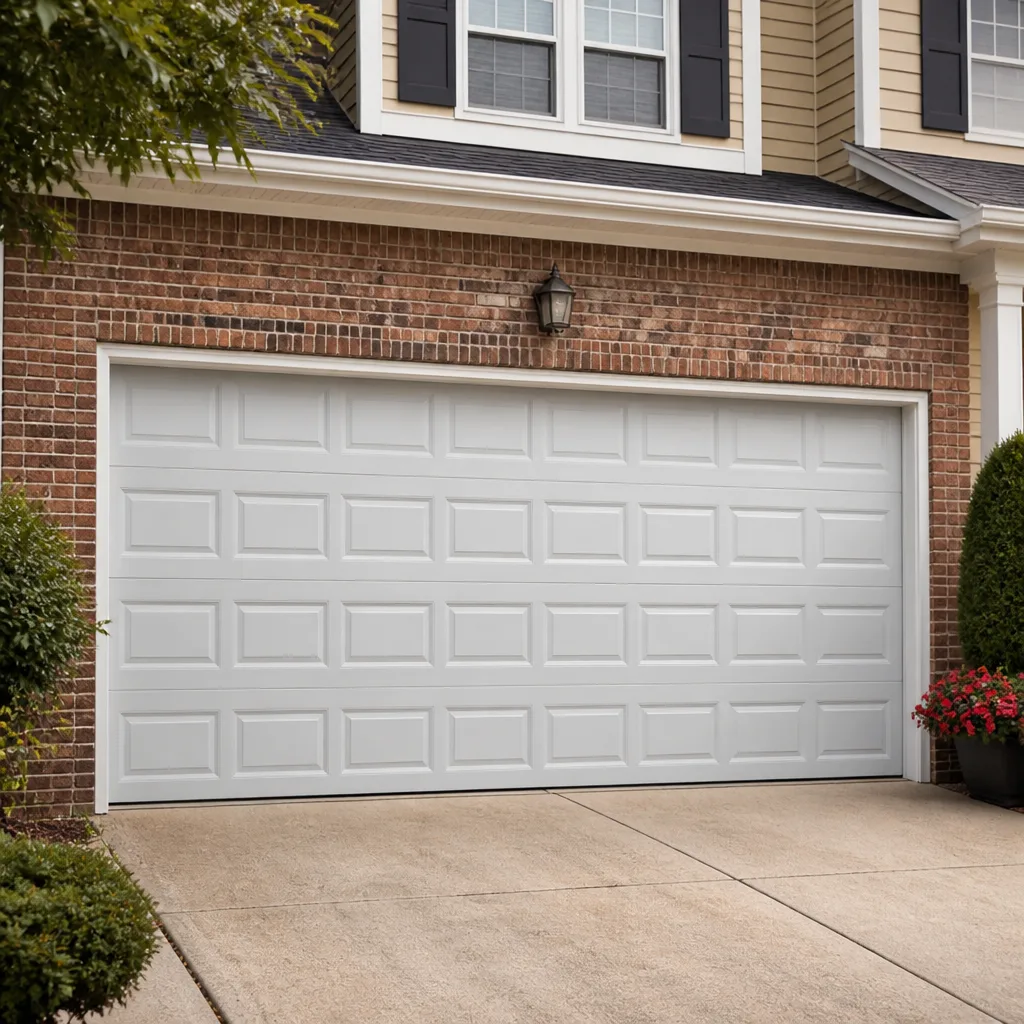 Raised-panel steel
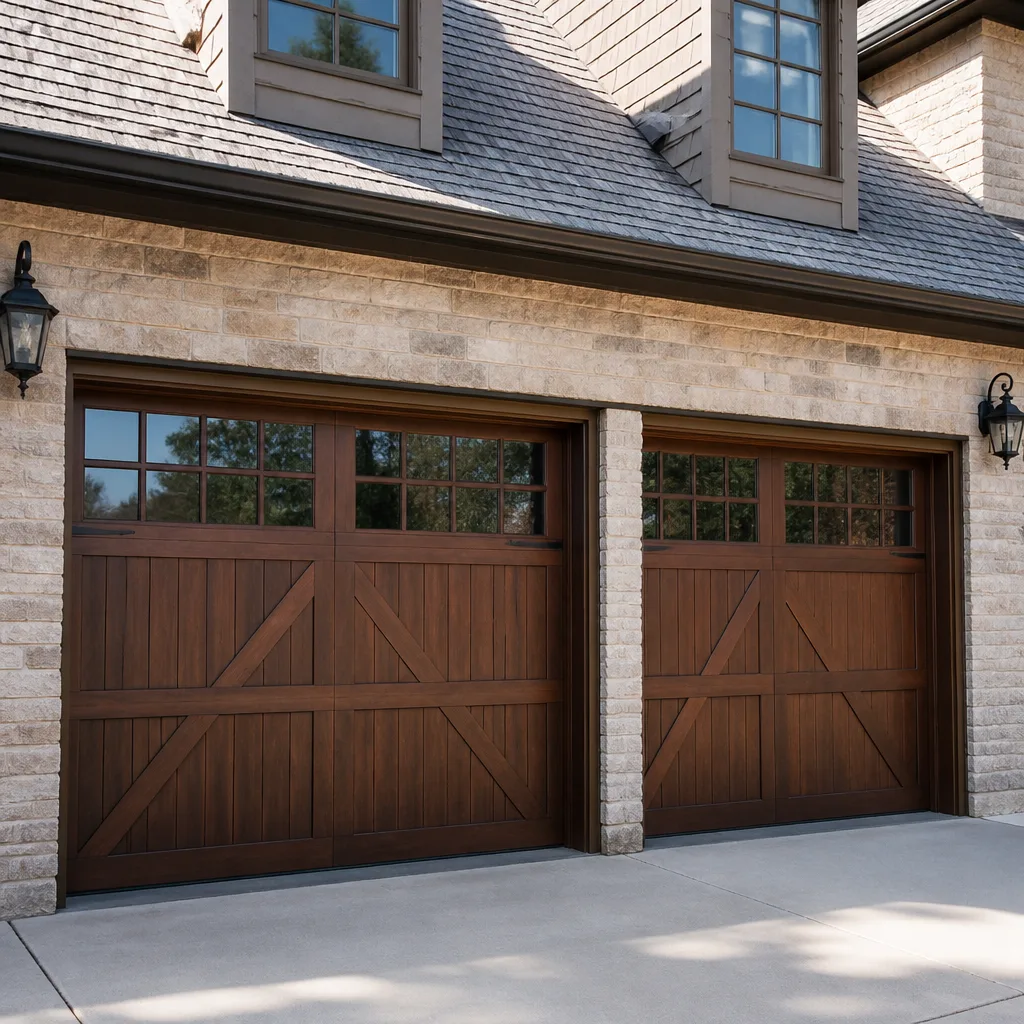 Carriage house
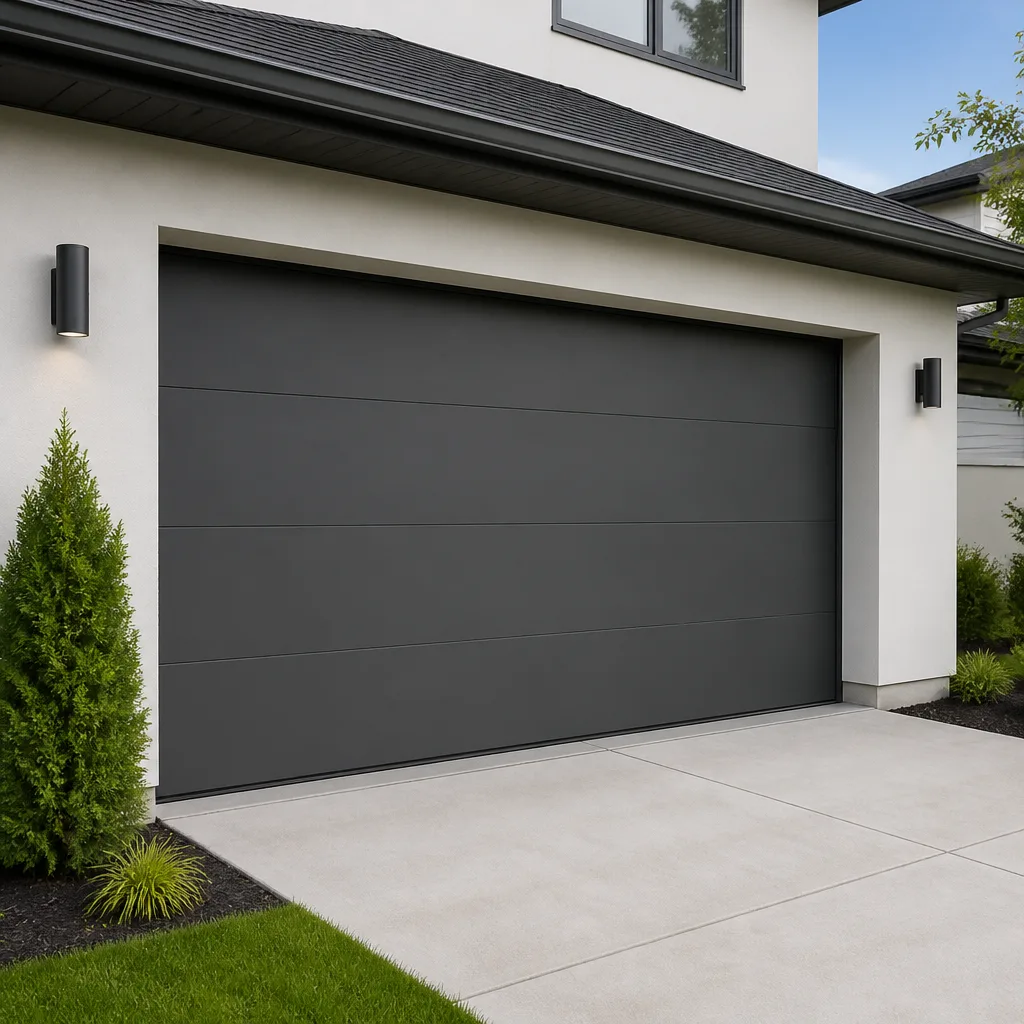 Modern flush
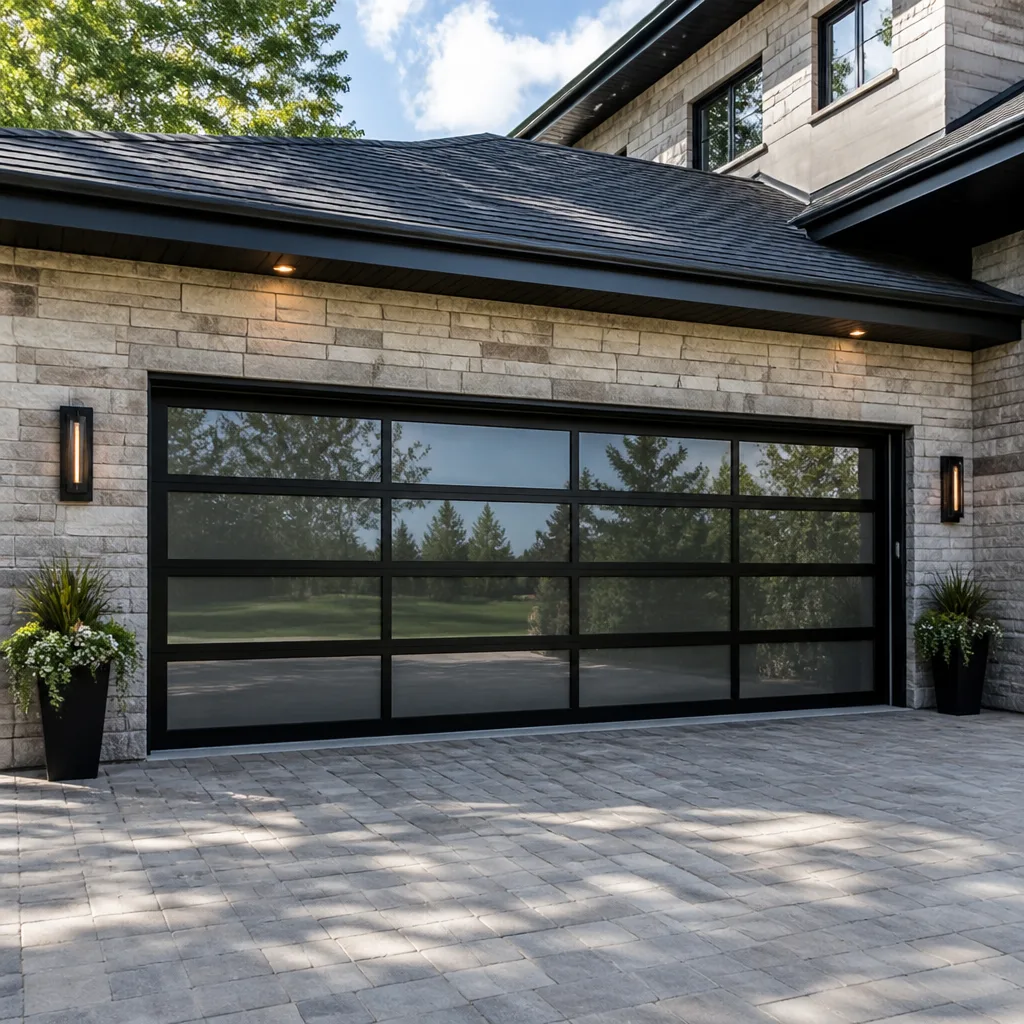 Full-view glass
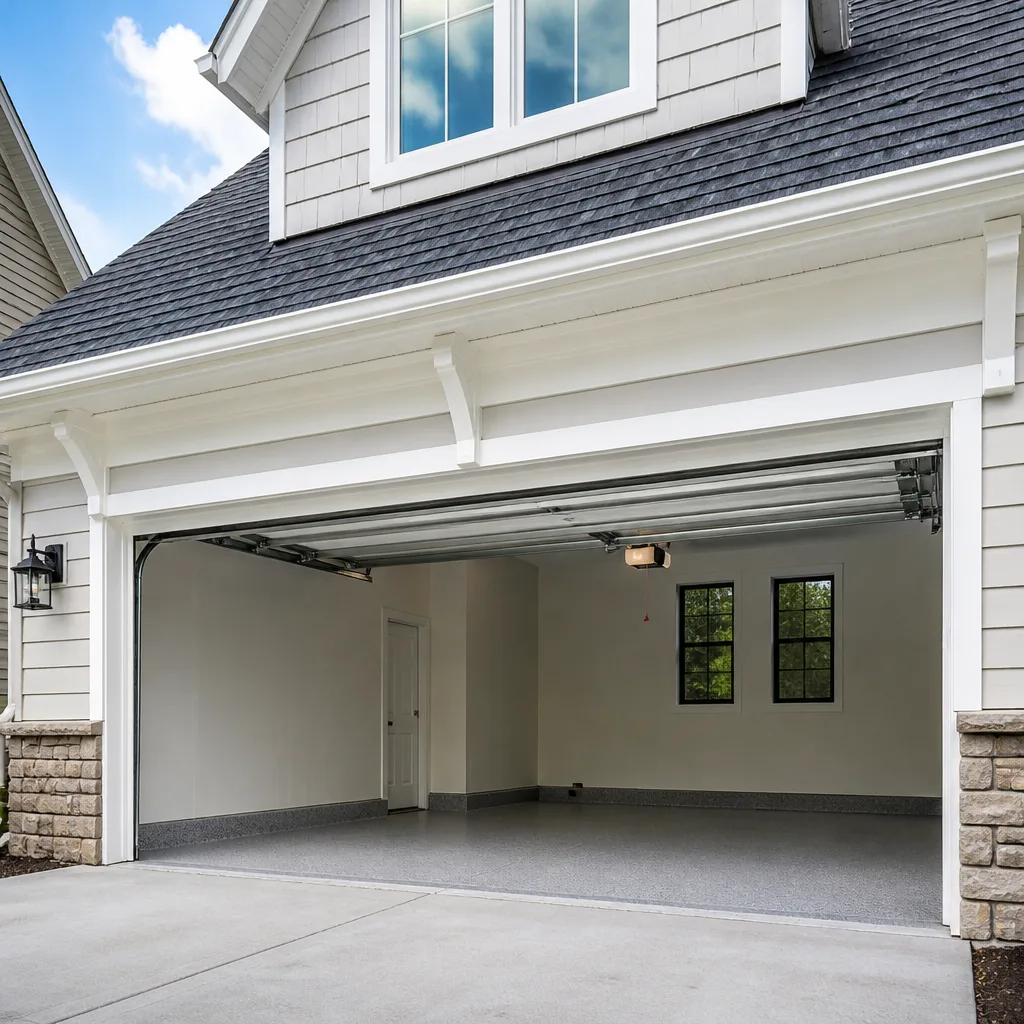 LiftMaster openers
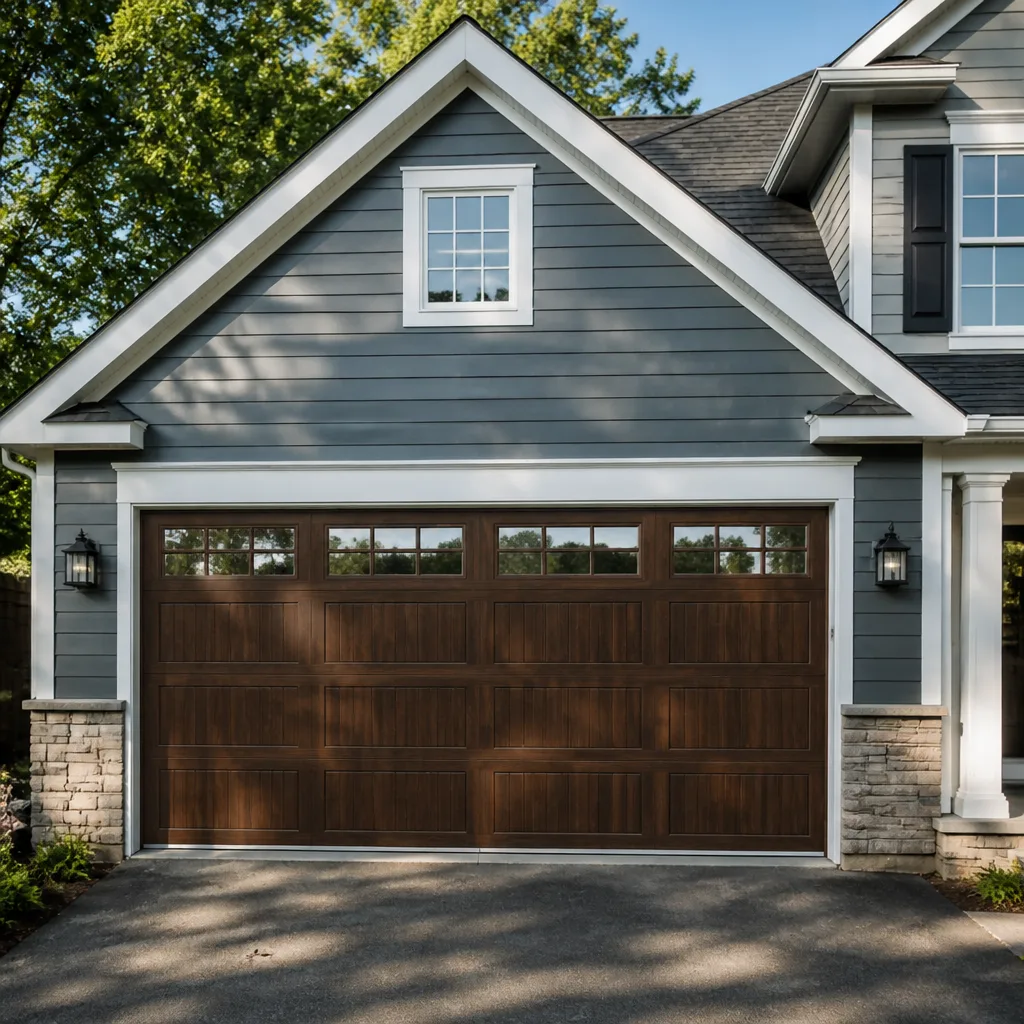 Chamberlain openers
Full 25-point door and opener safety check with every visit - springs, cables, rollers, tracks, and your LiftMaster or Chamberlain opener included
You get a price before we start. It does not change when the pro arrives.
Get your free estimateGarage Door Emergency Preparedness Guide for Port Saint Lucie Homes
A garage door that won’t close during a tropical storm watch isn’t a maintenance annoyance. It’s an open hole in the largest wall of your house, pointed straight at whatever the Atlantic is pushing toward the Treasure Coast. Most Port Saint Lucie homeowners spend more time planning a generator hookup than a door failure, yet the door is the one opening a storm can reach in seconds. This guide walks through the 15-minute protocol you should have in place before June 1st, how the manual release works on LiftMaster and Chamberlain openers, how to secure a failed door during a watch, what to do in the first half hour after a spring or cable lets go, and how to document damage for your insurer. Read it once now, then keep it somewhere you can find it when the power is out.
Quick Answer
Garage door emergency preparedness in Port Saint Lucie comes down to three things you set up before a storm: know how to disengage your opener’s manual release, keep a hurricane bracing kit and a way to secure the door on hand, and have a professional’s number saved so you aren’t searching when the wind is up. When a door fails during a watch, secure the opening first and call second. We answer 24/7, and a call outside dispatch hours is booked into the next opening, Sunday through Friday, 7am to 7pm.
Styles & brands we work with
- Raised-panel steel
- Carriage house
- Modern flush
- Full-view glass
- LiftMaster openers
- Chamberlain openers
Table of Contents
- Why a Garage Door Emergency in Port Saint Lucie Is Different
- How the Manual Release Works on LiftMaster and Chamberlain Openers
- The First 30 Minutes After a Cable Snaps or Spring Breaks
- How to Secure a Failed Door During a Storm Watch
- Post-Storm Damage Assessment: What to Document for Insurance
- What “Emergency Garage Door Service” Actually Means in Port Saint Lucie
- Pre-Season Checklist for Port Saint Lucie Homes
Why a Garage Door Emergency in Port Saint Lucie Is Different
North of the Florida state line, a broken garage door is mostly a hassle. In Port Saint Lucie it can be a structural problem. The garage door is usually the widest, lightest, most flexible assembly on the exterior of a house. During a high-wind event, that panel takes wind pressure across a span that no window or entry door matches. Every part of your emergency planning should start from that reality.
St. Lucie County building practice reflects it. Homes here are built with impact-rated openings, and the garage door on many newer houses is specified as a wind-load-rated door. That matters for two reasons. First, a rated door only performs as rated when its hardware is intact. A failing hinge, a worn roller, or a track that’s been bumped out of alignment changes how the door sits against its frame under load. Second, when a rated door is replaced, the replacement has to meet the same rating, which means a storm-season failure becomes an insurance and code question, not just a repair bill.
Then there’s the season itself. Hurricane season here runs from June 1 through November 30, and the stretch from late summer into fall is when the county watches the tropics most closely. That’s also when we field the most calls about doors that won’t close, doors that stop halfway, and openers that click but do nothing. Some of those calls trace back to a spring or cable at the end of its life. Others trace back to a limit setting that drifted over the summer. Both kinds of failure are worth catching before a watch is posted, not during one.
And there’s the daily heat and humidity. A garage in Port Saint Lucie is a hot, humid box most of the year. Metal hardware, torsion springs, and rollers live in that environment year-round. The practical takeaway: your garage door deserves a pre-season inspection the same way your roof and shutters do. For the repair side of that work, our garage door repair service covers the hardware that decides whether your door survives a storm.
How the Manual Release Works on LiftMaster and Chamberlain Openers
Every residential opener sold under the LiftMaster or Chamberlain name includes a manual release, and the cord hangs from the trolley that rides the rail. Pulling it disconnects the door from the motor so you can open and close the door by hand. The release is the single most important piece of emergency hardware in your garage, and most people have never touched it. Practice it on a calm, sunny day, with the door closed and the power on, so you know the feel and the sound before you actually need it.
Here’s how the release behaves on a typical LiftMaster or Chamberlain unit:
- Stand clear of the door and make sure no one is in the doorway.
- With the door fully closed, pull the release cord and handle straight down toward the floor. You should feel the trolley separate from the carriage.
- Lift the door slowly by hand. A properly balanced door will move with modest effort. If it feels heavy or fights you, stop. The spring may not be doing its job.
- To re-engage, close the door fully by hand, then pull the release cord toward the opener head (the opposite direction from the release) until the trolley snaps back into the carriage.
- Run the opener once to confirm the door travels normally and stops at the floor without reversing on its own.
A few things to know before storm season. The cord should be long enough to reach comfortably from standing height; if yours is too short, a short extension of the cord is a simple fix. Never hang anything from the release cord, and never tie it off. If the cord is tangled or the trolley won’t re-engage, that’s a service call, not a weekend project. Genie and Craftsman openers use a similar trolley release, but the mechanics of re-engagement differ enough that it’s worth having a technician show you the procedure on your own unit.
One more caution: the manual release lets you operate the door by hand, and that’s all it should do for you. It does not override a broken spring or a snapped cable, and lifting a door with a failed spring can drop it fast. Springs and cables are under extreme tension even when the door looks still. If you’re unsure of the door’s condition, leave it alone and call us. Our garage door opener repair service covers trolley and release issues on all the major brands.
The First 30 Minutes After a Cable Snaps or Spring Breaks
A cable snap is loud and a spring break is louder. Both leave the door unsupported and both are genuinely dangerous in the minutes afterward. The safety sequence below protects people first, property second, and the door last.
- Stop everyone. Keep children and pets away from the garage, and don’t let anyone stand under or beside the door.
- Don’t touch the door. A door with a failed spring or cable is holding its weight, or part of it, on hardware that’s no longer doing the job. Lifting it, pushing it, or banging on it can bring it down.
- Block the entry. Close the door between the garage and the house if you have one. If the garage is open to the outside, place something visible and sturdy at the threshold to keep people out, but don’t lean anything on the door itself.
- Turn off the opener. Unplug the motor or switch off the breaker that feeds the garage circuit. This prevents someone from pressing the remote and running the motor against a broken assembly.
- Look, don’t touch. Note what you can see from a safe distance: which side of the door dropped, whether a coil of spring is hanging, whether a cable is loose or wrapped. Take photos. Then stop.
- Call. Spring and cable work is the one garage door job we won’t talk a homeowner through over the phone. Our technicians have up to 10 years of experience working on torsion and extension springs, and the tools and technique matter.
If the door is stuck partway open and weather is moving in, go to the next section on securing the opening. If the door is fully down and blocked, the safety risk is lower and you can wait for a scheduled visit. Either way, don’t drive a car under a door that’s hanging on a broken cable.
How to Secure a Failed Door During a Storm Watch
When a door fails and a watch is posted, your goal stops being “fix the door” and becomes “close the opening.” There are three realistic options, and the right one depends on how the door failed and how much time you have.
Hurricane bracing kits
A bracing kit consists of vertical or horizontal reinforcement that spreads wind pressure from the door panels to the door’s track and the surrounding wall. Some kits use removable posts that fit into brackets attached to the floor and header. Others use a grid of horizontal members that hook onto the door’s vertical stiles. The difference matters: a kit designed to be installed permanently versus one installed only when a storm threatens. If your garage is your storm shelter or your only exit, a permanent system is worth the conversation with a door specialist. A removable kit works as a temporary measure but it must be installed correctly, and it’s not something you want to figure out for the first time in a wind band.
Securing the track and door
Heavy-duty zip ties around the track and roller stems can hold a weak door in its opening for a short window while you finish other preparations. This is a temporary measure only. It’s not a substitute for a bracing system, and it won’t help a door that’s already hanging on a broken spring. Use ties rated for outdoor structural use, wrap them snugly around the track at the roller brackets, and don’t overtighten to the point of distorting the track. If the door is off its track entirely, zip ties won’t fix it. You’re in the next category.
When to call versus when to board
Call for help when the door can still travel: a door that closes but won’t stay closed, an opener that runs but doesn’t lift, a door that stops short. Those are often fixable in a single visit, and a door that closes and latches is a secured opening. Board the opening when the door is off the track, hanging, or visibly bent. Use plywood rated for exterior use, secure it to the wall framing on both sides of the opening, and treat the garage as an exterior space from that point forward. Pull anything valuable out of the garage and into the house.
One local detail: in Port Saint Lucie, many garages have an interior door to the house and a second door to the yard. During a watch, know which one you’ll use and keep the path clear. Our garage door installation service includes wind-load-rated doors, and we’re happy to look at your bracing setup while we’re on site. A Clopay or Amarr door specified for this market is built to the rating your house was permitted for. Replacements that don’t meet it can complicate insurance.
Post-Storm Damage Assessment: What to Document for Insurance
Once the wind dies down and it’s safe to go outside, resist the urge to start cleaning. Insurance claims are won on documentation, and the first thing most homeowners do is destroy the evidence. A proper post-storm assessment takes about 20 minutes and a charged phone. Do it in this order.
- Wait for the all-clear. Don’t go into the garage or near the door until local officials have lifted the safety guidance for your area. A door that looks fine may be holding tension on damaged hardware.
- Photograph from a safe distance first. Wide shots of the whole opening, then close-ups of anything bent, dented, off its track, or hanging. Include a photo that shows the entire exterior wall so the adjuster can see how the door sits relative to the house.
- Document the interior. Photograph any water intrusion, ceiling staining, or debris inside the garage. If water came in under or around the door, note it. If anything in the garage was damaged, photograph that too.
- Save your paperwork. The original manufacturer label on the door, the opener’s model plate, and any receipts for previous repairs are all useful. If your door is a rated model, find the rating documentation if you have it.
- Get a written assessment before repairs. Have a specialist give you a written estimate of what failed and what needs replacing. Insurance adjusters often want a professional assessment. A written estimate done before any repair begins gives you a clean record.
- Don’t discard anything. Broken springs, bent hinges, and damaged panels should stay put until the adjuster has seen them or has told you it’s fine to remove them.
One more thing worth knowing: after a storm, the first thing many homeowners do is call a general contractor who also does doors. For an insurance claim, you want an assessment from someone whose entire trade is garage doors, because the report needs to distinguish between wind damage and a part that was already near end of life. That distinction affects how the claim is handled.
What “Emergency Garage Door Service” Actually Means in Port Saint Lucie
If your garage door fails at 2am, here’s what actually happens. You call, and someone answers. That’s it for the 2am part. We answer 24/7 so you can reach a person, get guidance for securing the opening safely, and get on the schedule. A technician is dispatched during our regular window, 7am to 7pm, Sunday through Friday. We’re closed Saturday. A call outside dispatch hours is booked into the next opening, Sunday through Friday, 7am to 7pm.
That distinction matters for two reasons. First, it tells you the truth. If you hear a company promise a technician at your door within the hour at any hour, that’s either a national dispatch network that bills the trip charge to you or it’s a script. A local trade business that describes its dispatch window honestly is the one you want handling a spring repair. Second, it tells you what to do in the meantime. If you’ve reached a person, that person can walk you through the safety sequence and confirm what not to touch. Then you sleep, and we come out at the next window.
What counts as an actual emergency, in our view: a door that won’t close and is the only barrier between your home and the outside. A door that’s hanging or off the track. A car trapped in the garage. A broken spring that’s left the door too heavy to lift. What can wait for a scheduled visit: a noisy opener, a door that reverses on its own, a remote that only works up close. For the second list, a regular service call during the week gets it sorted faster than a night of worrying. For the whole picture on what we do, start at Port Saint Lucie Garage Door Repair Pros.
Pre-Season Checklist for Port Saint Lucie Homes
This is the list we’d hand a neighbor. Run through it once in May, then again in late summer. Each item takes minutes, and the whole list can be done in one afternoon.
- Test the manual release on your LiftMaster or Chamberlain opener. Pull it, lift the door by hand, and re-engage. If anything feels heavy or fights you, schedule a service call.
- Look at the springs. From a distance, check for gaps in a torsion spring coil or worn paint on an extension spring. Don’t touch; just look. If you see a gap, stop.
- Check the door balance. With the door closed and the opener disconnected, lift it to about waist height and let go. A well-balanced door stays put. One that drops is telling you something.
- Inspect the tracks. Run your hand along the length of each track (keeping clear of springs and cables) and look for dents, bends, or debris. A small bend can be fixed; a serious one can’t.
- Test the safety sensors. Wave an object across the photo-eye beam at the bottom of the door. The door should reverse. If it doesn’t, that’s a same-day fix.
- Confirm your bracing plan. If you have a hurricane bracing kit, check every piece, read the instructions, and know where the brackets mount. If you don’t, ask a specialist whether one makes sense for your door.
- Test the release from inside, in the dark. Practice reaching the cord without a flashlight. In a real outage you won’t have much light.
- Save the number. Write it inside the garage or in your phone. Call (855) 814-2973. We answer 24/7 with fast dispatch from 7am to 7pm.
One more pre-season move worth considering: get an inspection done by a garage door specialist before the season starts. We see openers that need a limit adjustment, rollers that are dry, and springs that are close to failure. Catching those in May keeps them out of your hurricane plan. And if the door itself is near the end of its life, spring is a much better time to talk about replacement than during a watch.
Common Mistakes to Avoid
- Never pull the manual release before you’ve done it once in practice. Two minutes with the cord on a calm day beats fumbling for it in a dark garage during a watch.
- Never use the manual release as a way to run the door with a broken spring. The door will lift much heavier than normal and can drop hard enough to injure someone.
- Don’t zip-tie a door that’s already off the track. Ties around the track only help a door that’s still seated. A door that’s out of its track needs to be boarded and looked at by a specialist.
- Don’t start repairs before you’ve documented storm damage. A clean photograph record and a written estimate before any work begins are both worth more to your claim than a fast fix.
- Don’t assume a call at 2am gets a technician at your door at 2am. We answer 24/7, but a technician is dispatched during 7am to 7pm, Sunday through Friday.
- Don’t ignore a door that reverses on its own. In a wind event, a door that reverses unexpectedly can leave the opening unsecured at the wrong moment.
- Don’t use a general contractor for spring or cable work. The springs hold hundreds of pounds of tension. That’s a specialized job, and it’s the job our entire trade exists around.
For a closer look at what a specialist does on these repairs, see our overview of garage door repair.
See the difference
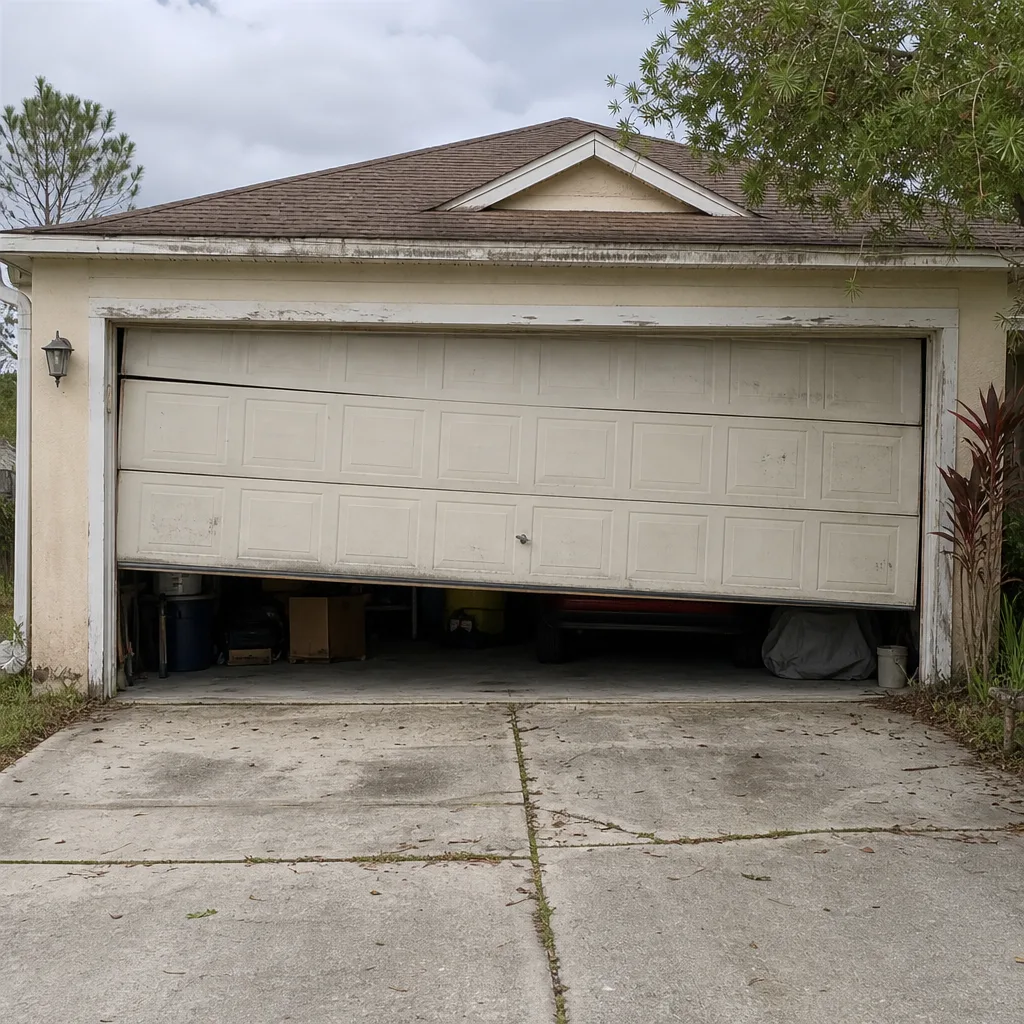 Before
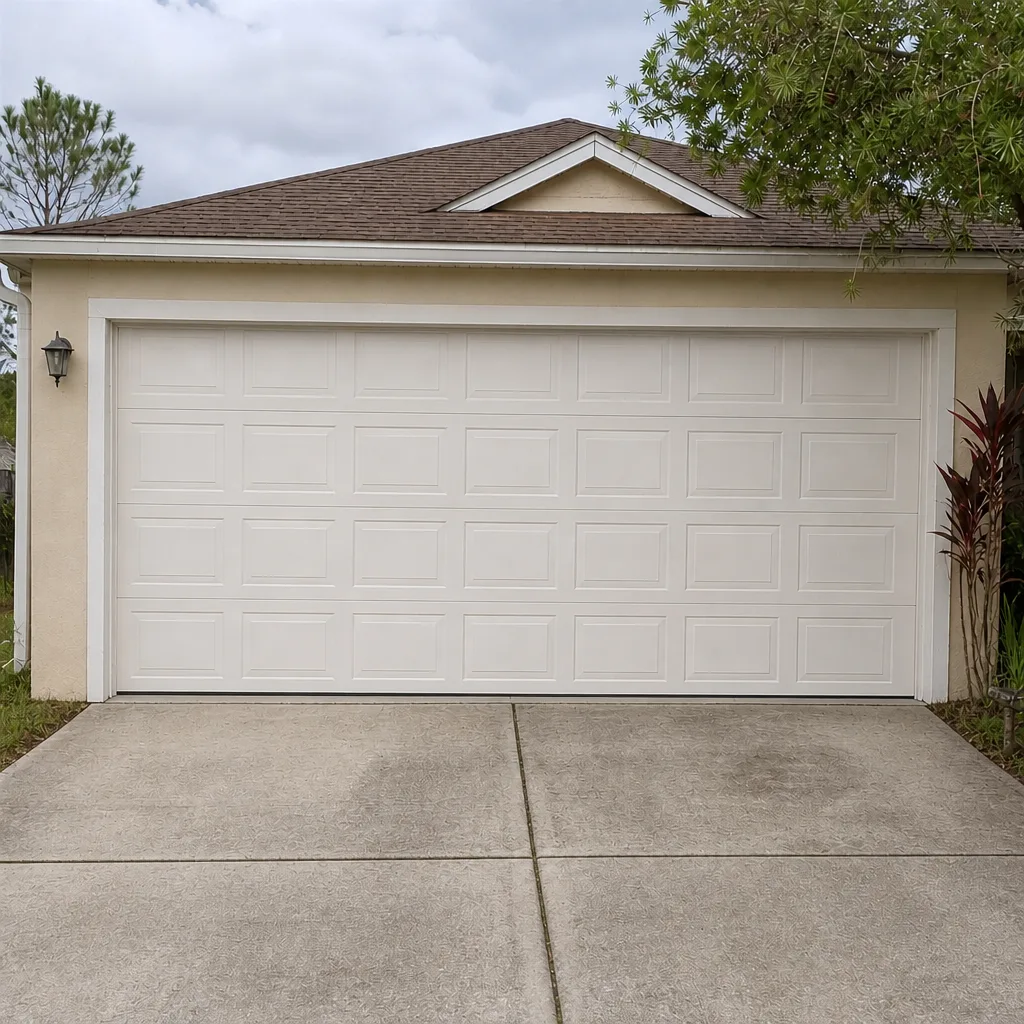 After
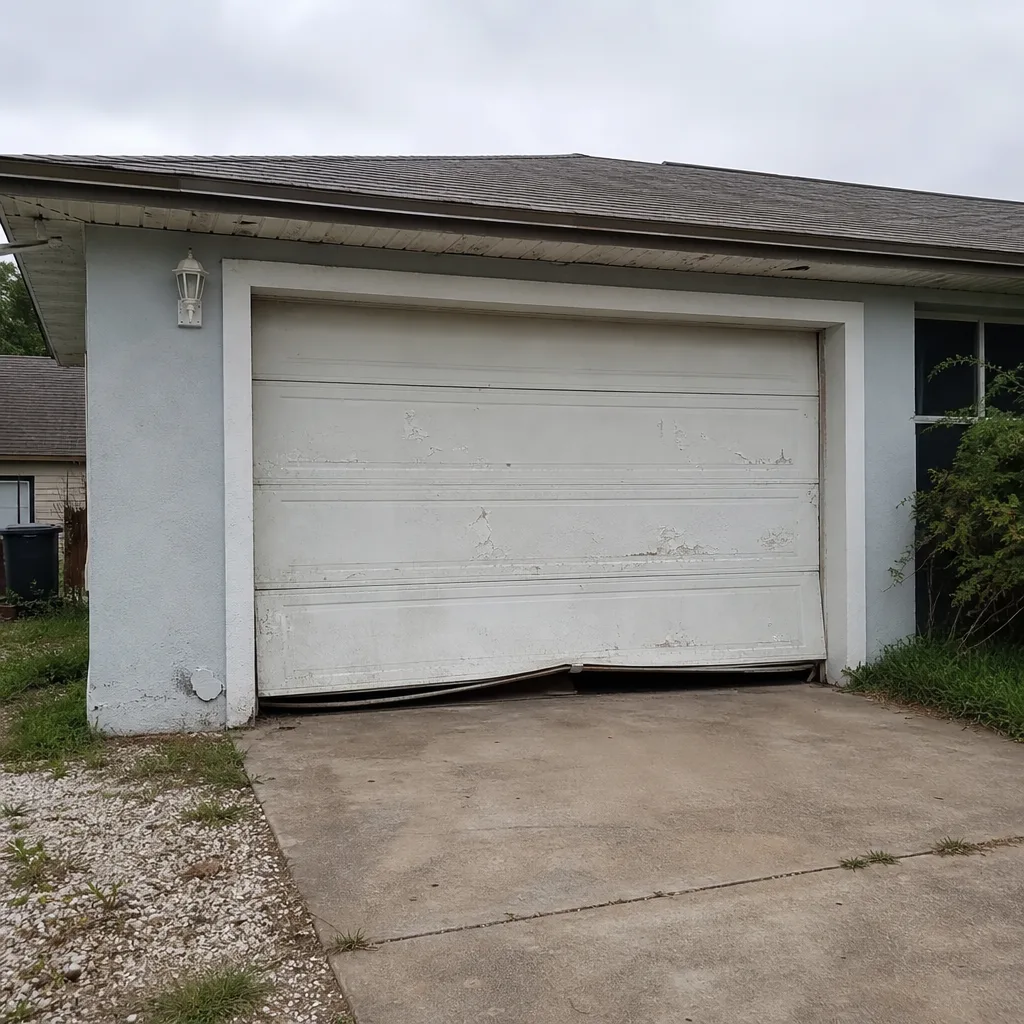 Before
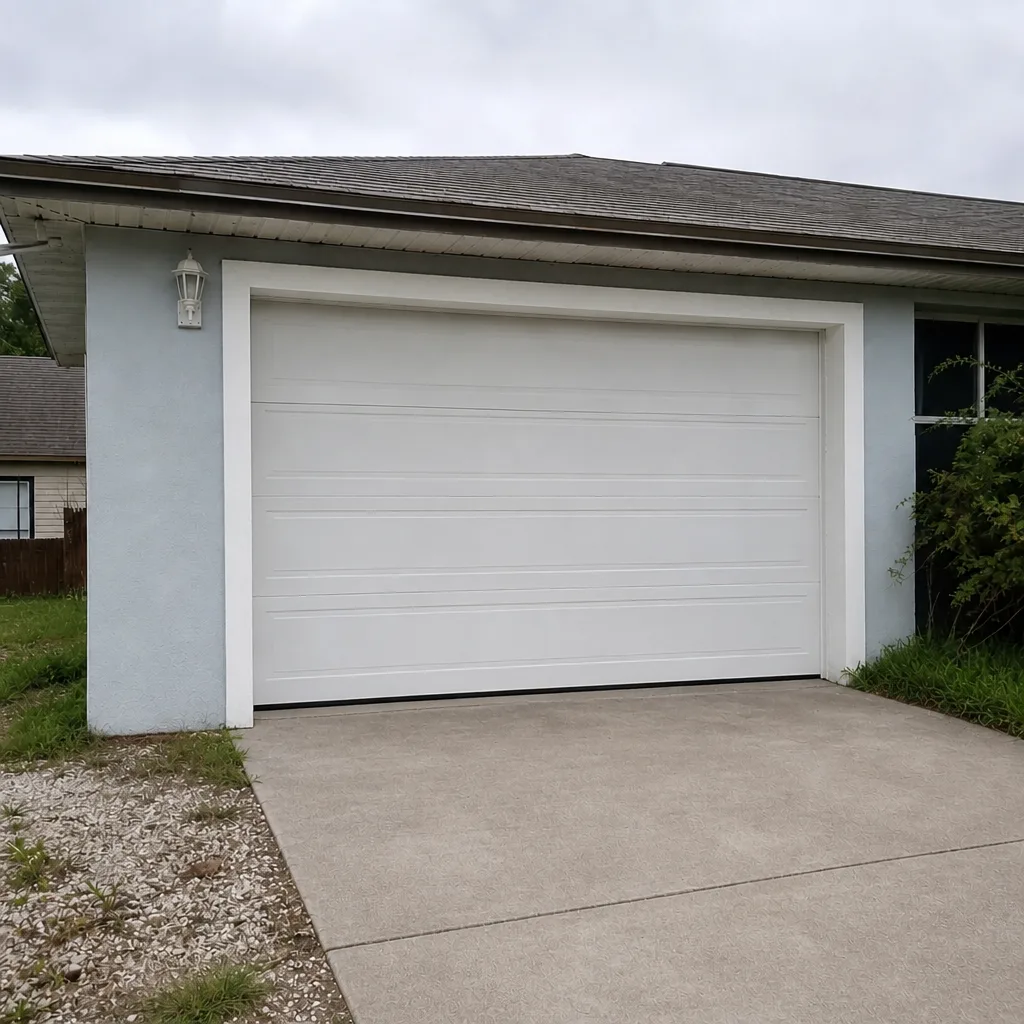 After
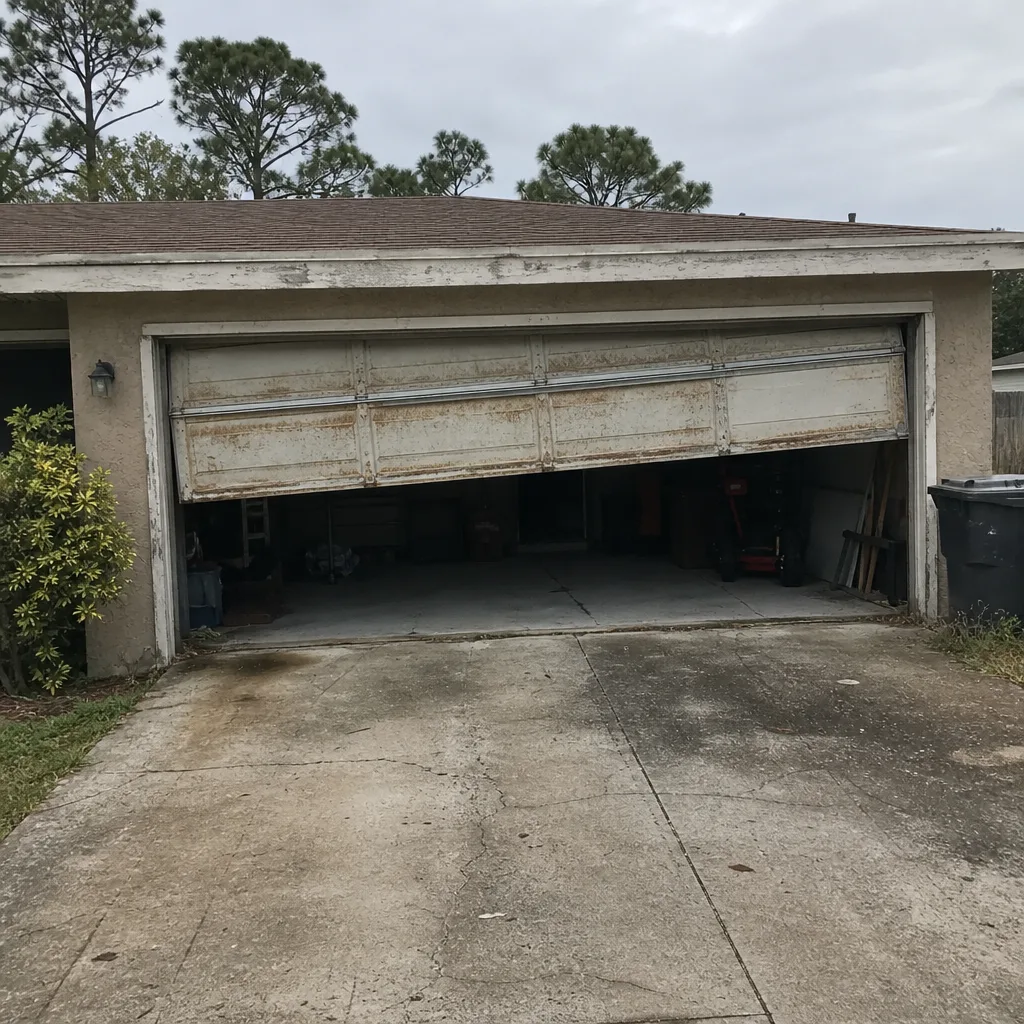 Before
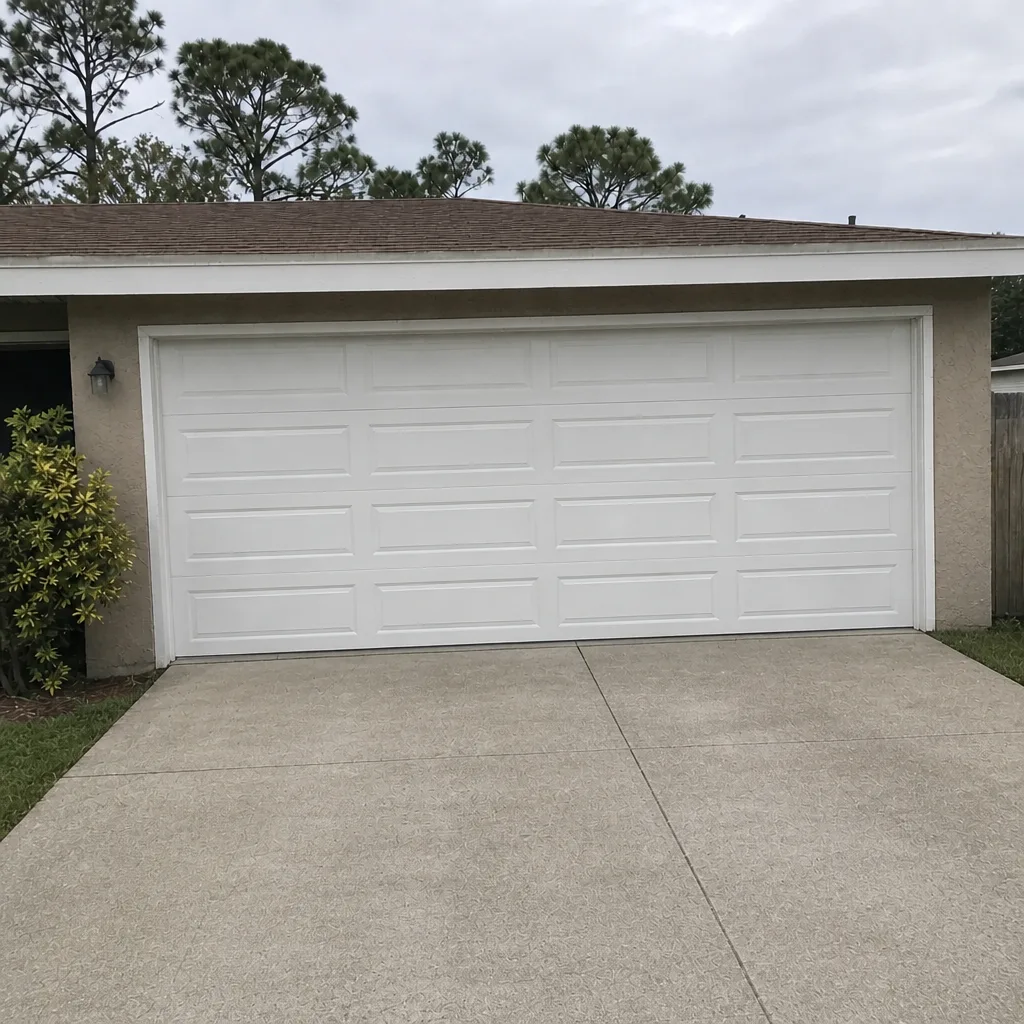 After
When to Call a Professional
Call a professional when the door won’t close and latch on its own, when you see a spring coil with a gap or a cable that’s hanging loose, or when the door is stuck partway and won’t travel either direction. Call when the opener runs but the door doesn’t move, when the door reverses unexpectedly, or when the door’s balance test fails. And call before you try to troubleshoot any of those yourself, because the springs and cables under the door are the most dangerous parts of the whole assembly. Call for damage assessment after a storm event, before you start repairs, because a written estimate helps the insurance side of the process. For a door that’s still under warranty from a manufacturer, a specialist’s visit keeps that documentation clean as well. Port Saint Lucie Garage Door Repair Pros offers free estimates in Port Saint Lucie – call (855) 814-2973. We answer 24/7. Fast dispatch from 7am to 7pm, Sunday through Friday.
Frequently Asked Questions
Pull the manual release cord that hangs from the trolley on the rail of your LiftMaster or Chamberlain opener. This disconnects the door from the motor so you can lift it by hand. To re-engage, close the door fully by hand and pull the cord back toward the opener head until the trolley snaps into the carriage. Practice this on a calm day so you know the feel of it before an outage.
Keep everyone away from the door, don’t lift or push it, unplug the opener, and photograph the damage from a safe distance. A door with a broken spring is unsupported and can drop hard. Call (855) 814-2973 for guidance on securing the opening. We answer 24/7, and a call outside dispatch hours is booked into the next opening, Sunday through Friday, 7am to 7pm.
Some removable kits are designed for homeowner installation, and the manufacturer’s instructions are the place to start. The catch is that a bracing kit only works if it’s mounted correctly to the door’s track and the surrounding wall. If you’re not confident about that step, ask a specialist to look at your setup before the season starts. A free estimate from us includes advice on whether your door needs one.
Photograph the entire opening and exterior wall from a safe distance first, then close-ups of anything bent, dented, or hanging. Photograph the interior of the garage, including any water intrusion. Don’t discard broken parts before the adjuster has seen them. Get a written estimate from a garage door specialist before you begin repairs, and keep the manufacturer’s label on the door and any previous repair receipts.
The price is set per job and quoted in a written estimate, so it doesn’t change based on the hour you call. If a technician is dispatched after dark there’s no separate premium for it. What does happen if you call at 2am: we book the visit into the next dispatch window, Sunday through Friday, 7am to 7pm. The estimate itself is free, and you’ll know the price before any work begins.
Test the manual release and the safety sensors once a month, and run a full balance and visual inspection before June 1 and again in late summer. The heat and humidity here are hard on springs, rollers, and limit settings, and a quick test catches most issues early. If anything feels off during a test, stop and call us. Call (855) 814-2973 for an exact look at your setup. Estimates are free.
The Bottom Line
A garage door emergency in Port Saint Lucie is a storm-season problem first and a repair problem second. The plan that protects your house is a practiced manual release, a bracing or boarding plan you’ve thought through before a watch, a clear safety sequence for broken springs and cables, and a phone number saved somewhere you can find it in the dark. Do the pre-season inspection in May, test your opener’s release once a month, and don’t touch a cracked spring or a hanging cable. From opener to panels, that’s the work our whole trade is built around, and we’re glad to help plan it.
Contact
If your garage door needs a look – whether it’s a spring that’s nearing the end of its life, a door that won’t close, or a pre-season inspection before the wind picks up – call (855) 814-2973 for a free estimate. We answer 24/7. Fast dispatch from 7am to 7pm, Sunday through Friday. Our technicians have up to 10 years of experience on LiftMaster, Chamberlain, Genie, Clopay, Amarr, Wayne Dalton, Craftsman, and Raynor equipment. Port Saint Lucie Garage Door Repair Pros is a single-trade garage door specialist, and garage doors are all we do.
Written by the team at Port Saint Lucie Garage Door Repair Pros.